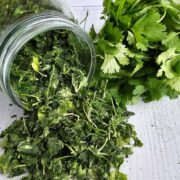
Freeze Drying Cilantro
How to freeze dry cilantro for long-term food storage.
Servings: 1 person
Calories: 1kcal
Equipment
- Jars Mylar bags or vacuum seal bags are an option
- Vacuum sealer Oxygen absorbers would be an option for sealing in bag.
Ingredients
- Cilantro
Instructions
- Wash
- Destem if you don't have use for the excess stems.
- Load onto your freeze dryer trays. I use a Harvest Right Freeze Dryer.
- Run your machine according to your manufacturer's directions. Follow the prompts.
- I run a regular freezing cycle at 95°F / 35°C, and an extra 18 hours of dry time. (This is similar to dehydrating)
- Check for crisp, breakable leaves and stems to know if all moisture has been removed.
- Vacuum seal in an airtight container.
Notes
- There's no need to pre-freeze cilantro before freeze-drying.
- We remove much of the excess stems because, whether freeze-dried or dehydrated, they don't have a great texture/flavor unless we plan on powdering it all. It goes into our compost.
- Feel free to pile the trays a little higher than the recommended height of the tray rim. They will shrink some while drying to settle into the trays. Just don't pile more than will easily slide into the machine.
- Freeze-dried herbs really need to stay in an airtight container, or they can get soft. Be sure to reseal your container after using it. I love this handheld vacuum sealer because it is readily accessible and vacuum sealers in about 40 seconds.
Yield, Storage, and Usage
- 1 Tablespoon of freeze dried cilantro = 1 tablespoon of fresh cilantro.
- Expect the shelf life of freeze-dried cilantro to last about five years in a cool, dark, dry storage in vacuum-sealed containers (or mylar bags with oxygen absorbers). Your mileage may vary and you'll get much longer.
- Cilantro can be used instead of fresh in many recipes you already love: salsas, meals, soups, stews, etc. And yes! It can be used in fresh guacamole, too!
Nutrition
Serving: 0.25cup | Calories: 1kcal | Carbohydrates: 0.1g | Protein: 0.1g | Fat: 0.02g | Sodium: 2mg | Potassium: 21mg | Fiber: 0.1g | Sugar: 0.03g