
How to Dehydrate Fresh Parmesan Cheese

This post may contain affiliate links. We may earn a commission if you purchase via our links. See the disclosure page for more info.

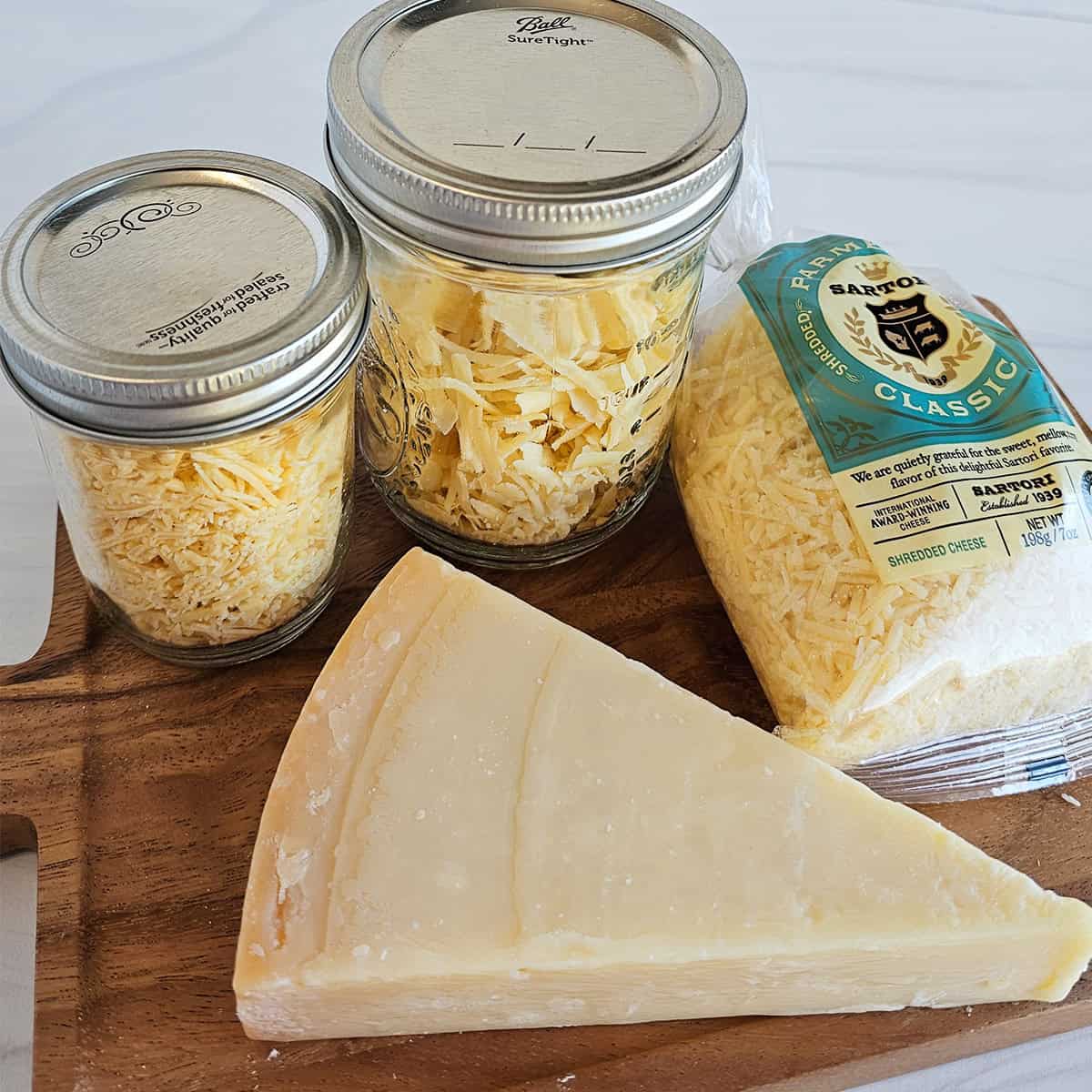
Have you ever wondered how to make fresh parmesan cheese shelf-stable? With these easy-to-follow steps, you can short-term store it by dehydrating it!
This post may contain affiliate links. Read our disclosure policy here.
Parmesan cheese, like other cheeses, is not truly shelf-stable in the long term because of the amount of fat in it. However, you can extend its shelf life for meals in a jar or seasoning blends like my yummy and umami Mushroom Parmesan Seasoning Blend.
Or, you can use it to snack on! My husband loves a handful of crunchy parmesan for a healthy, quick protein snack with some fruit.
How to Dehydrate Parmesan Cheese
You can dehydrate parmesan cheese easily in your food dehydrator. It works better than softer cheeses such as cheddar cheese for storage. You can also purchase parmesan cheese that has already been shredded for you.
Steps
- Shred parmesan cheese with a box grater or food processor
- Place paper towels onto dehydrator sheets. This will help absorb the fat that comes from the cheese. Make sure to change out once during the process.
- Spread cheese in a thin layer across the paper towel-covered dehydrator trays.
- Dry at 125°F / 35°C for up until parmesan shreds are no longer ‘wet’ from the fats, and snap easily. You can get a handy dehydrating temperature magnet for your machine or fridge and never worry about temps again!
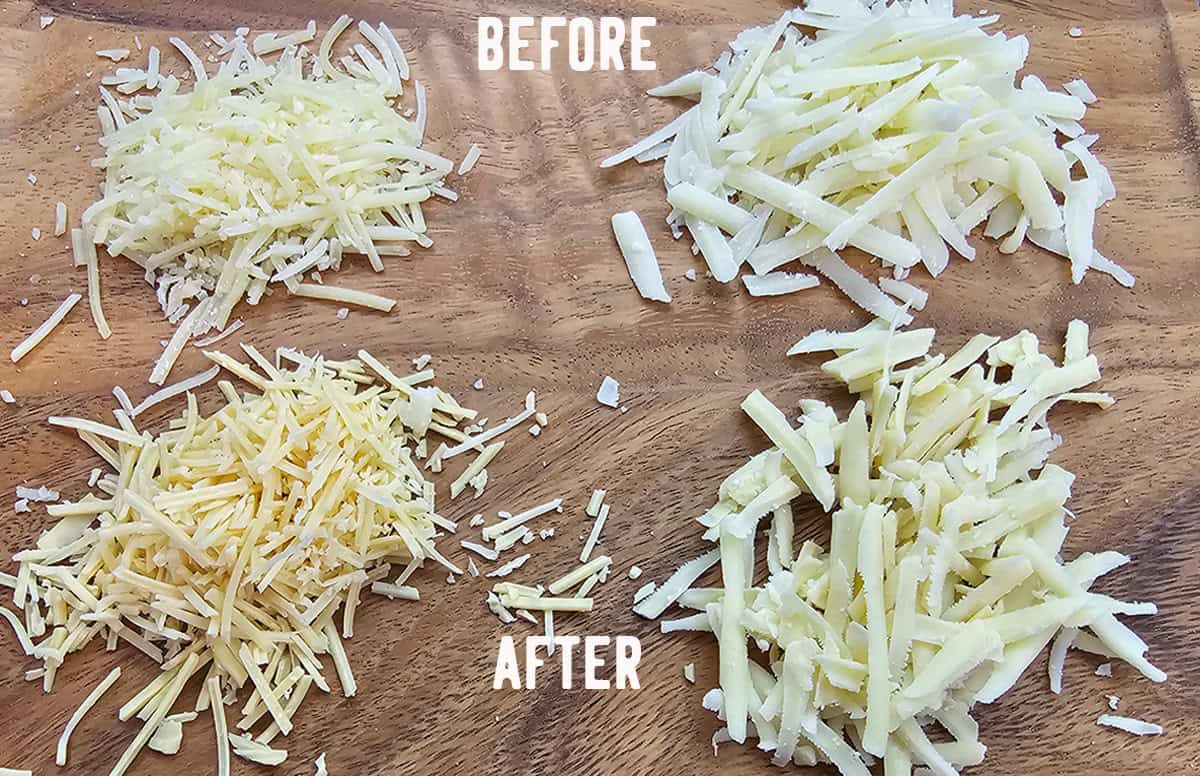
How to Store
Place dried parmesan shreds into an airtight container. Optimal storage is in the freezer or fridge, but you may place on the shelf.
Why Dried Parmesan Cheese is not Long-Term Shelf-Stable.
The fats in parmesan cheese are never fully removed by the home dehydrating process. You are removing the water content, not the fat. Thus, it is not reliably shelf-stable for years. You may get six months, you may get a year.
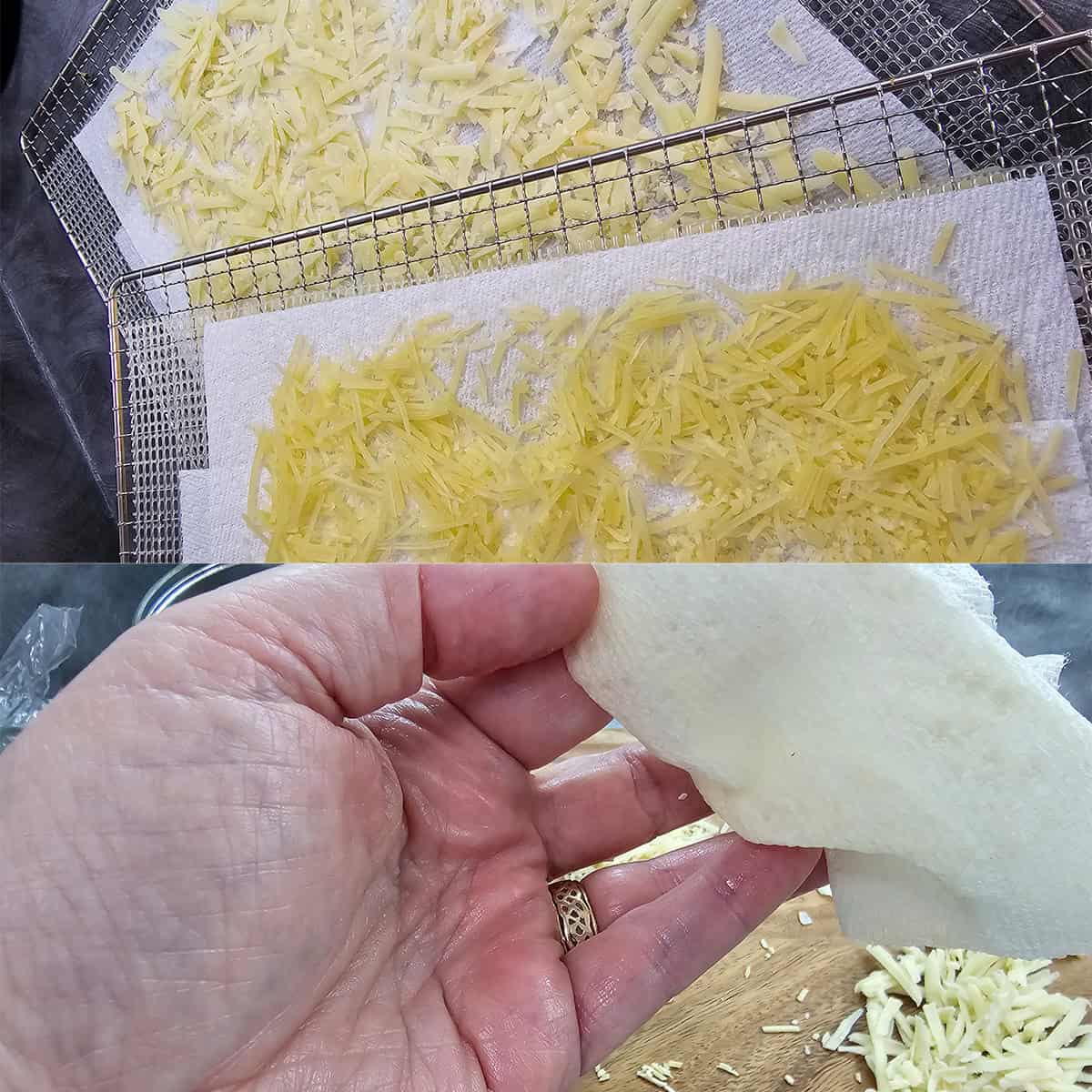
In the image above, you can see the fat that transferred from the paper towel to my hands on the first exchange of the paper towel during the process.
Oxidation of fats (fat rancidity) may occur and your cheese will smell and taste off once it happens. Thus, long term storage isn’t recommended for this reason.
But for short-term, it’s great as a shelf-stable option for having in camping/hiking meals, adding to meals in a jar, and more!
Rehydrating Dried Parmesan
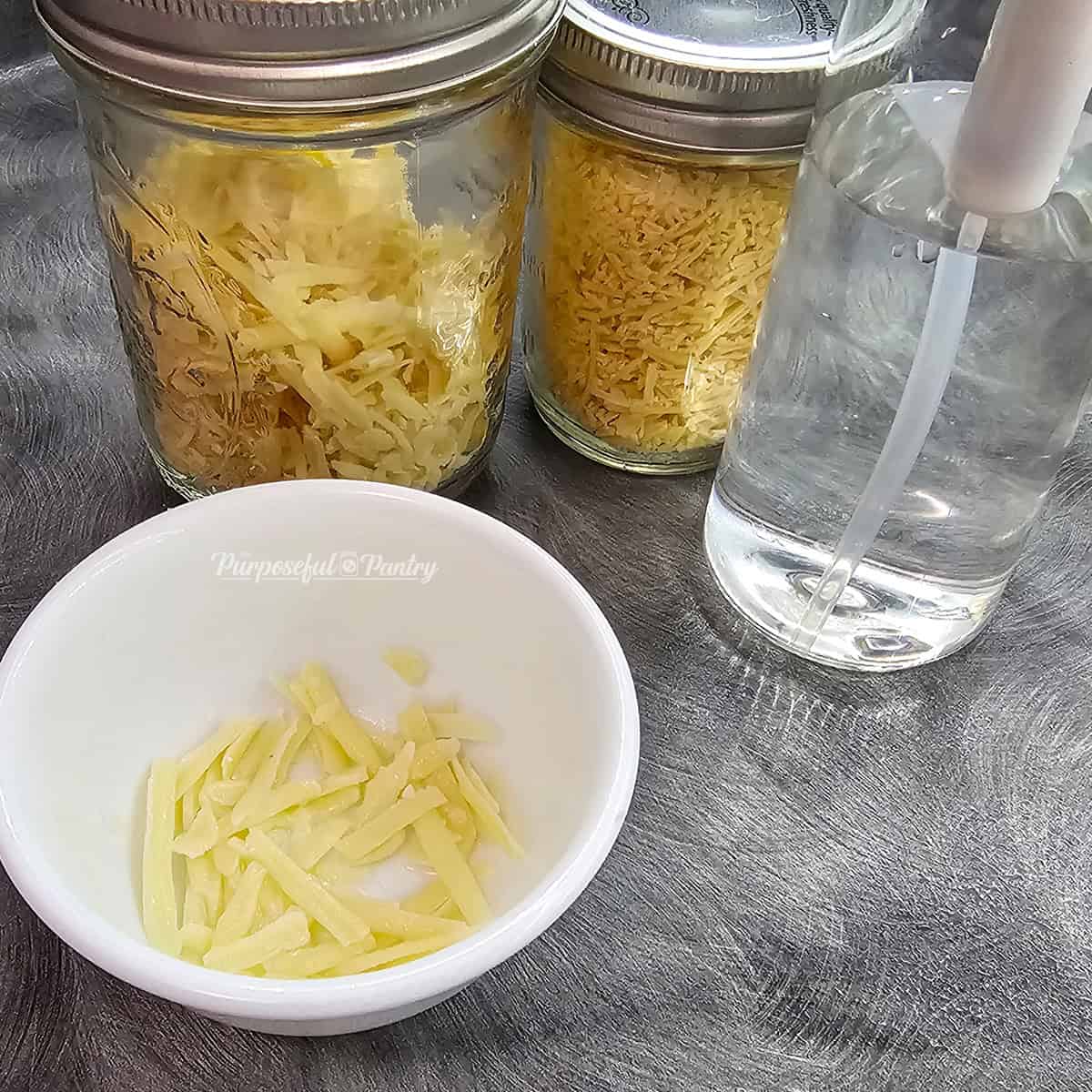
- Place in a thin layer and spritz with water. I use a small misting water bottle for doing this kind of rehydration.
- Allow the water to absorb and spritz more if necessary. You don’t want to water log the cheese.
Uses
- Create a wonderfully umami Mushroom and Parmesan Seasoning Blend.
- Use as fresh in salads or dishes.
- Add to Meals in a Jar at the time of use. I don’t recommend storing the cheese inside the jar unless it’s a short-term meal. If it’s longer-term, keep it separate and use it when making the meal.
What types of Cheese can be Dehydrated?
While all cheese can be dehydrated, not all cheeses are best for dehydrating.
Use hard cheeses like:
- Parmesan
- Asiago
- Pecorino
Softer cheeses tend to melt more than dry, and storage in the freezer after dehydrating is optimal. They also tend to contain more fat (more lactose) than the harder cheeses; thus, changing out paper towels is more important, and fat oxidation in storage is more of a concern.

Dehydrate Parmesan Cheese
Equipment
- Grater
Ingredients
- Parmesan Cheese Shredded or shaved
Instructions
- Shred parmesan cheese with a box grater or food processor
- Place paper towels onto dehydrator sheets. This will help absorb the fat that comes from the cheese. Make sure to change out once during the process.
- Spread cheese in a thin layer across the paper towel-covered dehydrator trays.
- Dry at 125°F / 35°C for up until parmesan shreds are no longer ‘wet’ from the fats, and snap easily. You can get a handy dehydrating temperature magnet for your machine or fridge and never worry about temps again!
Darcy’s Tips
- It’s important to change the paper towels at least once during the process. Twice if necessary.
- Do not use fruit leather sheets or silicone sheets to dry on, even if paper towels on top.
Rehydrating Dried Parmesan
- Place in a thin layer and spritz with water. I use a small misting water bottle for doing this kind of rehydration.
- Allow the water to absorb and spritz more if necessary. You don’t want to water log the cheese.
Uses
- Create a wonderfully umami Mushroom and Parmesan Seasoning Blend.
- Use as fresh in salads or dishes.
- Add to Meals in a Jar at the time of use. I don’t recommend storing the cheese inside the jar unless it’s a short-term meal. If it’s longer-term, keep it separate and use it when making the meal.
Nutrition
Nutritional information is an estimation only. Nutrient information for dehydrated foods is based on fresh. Use 1/4 of the servicing size for the same nutrient information. Thus 1 Cup of fresh fruit has the same sugars as 1/4 dried.
©ThePurposefulPantry. Photographs and content are copyright protected. Sharing of this recipe’s link is both encouraged and appreciated. Copying and/or pasting full recipes to any social media is strictly prohibited.


Ohhhhh my got to try this.Tomorrows grocery day