Save Your Kimchi for This!

This post may contain affiliate links. We may earn a commission if you purchase via our links. See the disclosure page for more info.

Dehydrating kimchi is a wonderful way to preserve its flavor and nutrients even when you can’t finish the big jar you purchased or fermented yourself! Dried kimchi can be enjoyed as a crunchy snack, refreshed in ramen, or as a tangy seasoning!
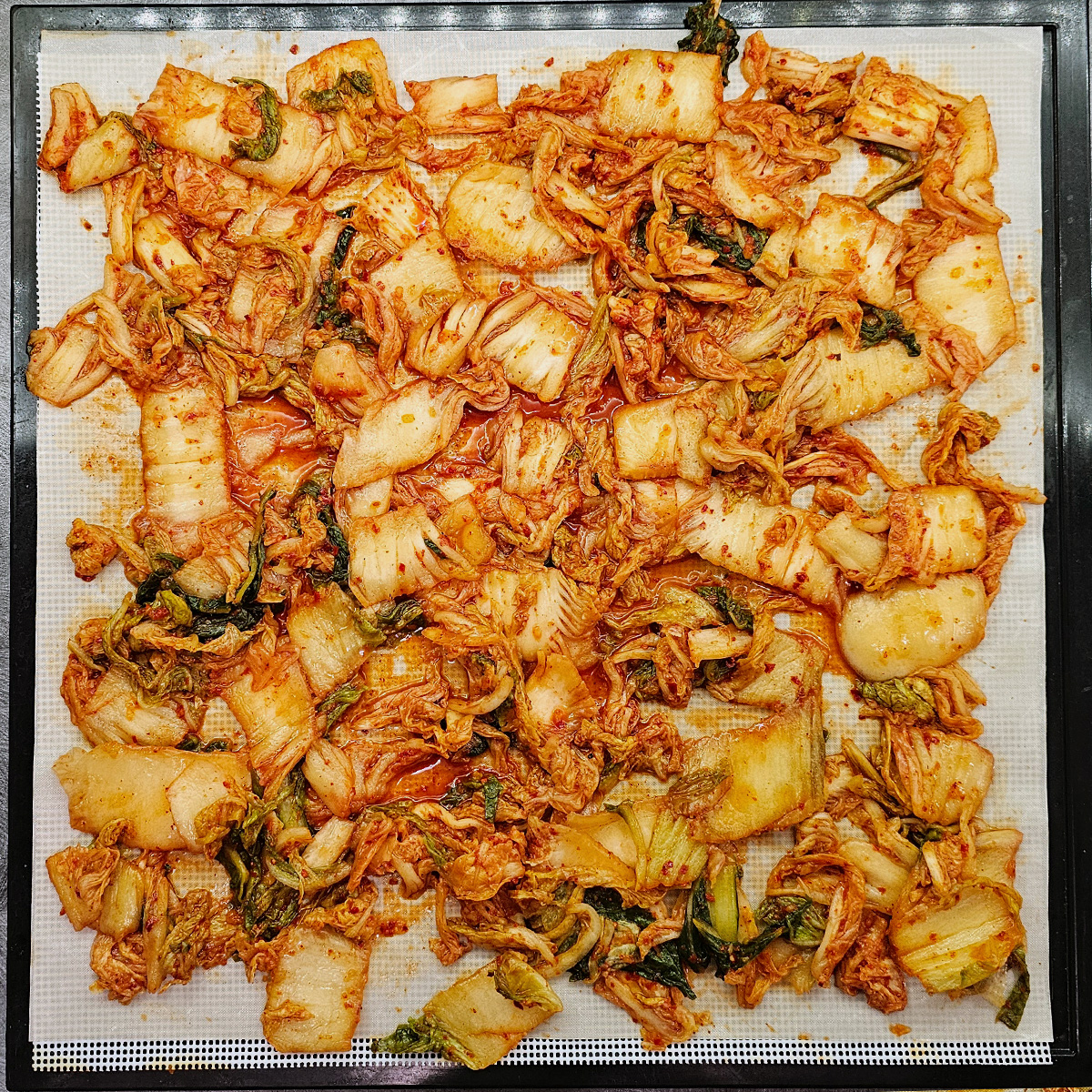
Kimchi is a lacto-fermented dish from Korea that usually includes napa cabbage and other vegetables. It is used as a garnish or as an ingredient in soup.
How to Keep the Nutrients in Dried Kimchi
Drying kimchi can be as easy as placing onto trays and drying.
But if you want to keep the nutrients available in kimchi, including probiotics and many others, it’s important to understand the two basics you can work with.
- Home-fermented or fresh, commercially fermented, this kimchi is full of all the probiotics and excellent nutrients from the fermenting process. Drying under 115°F/35°C is vital to keep those nutrients in the ‘raw’ state so that they are available to you whether you are powdering for seasoning, adding to your favorite ramen bowl, or eating on its own.
- Commercially jarred kimchi has gone through a canning process and is considered shelf-stable. However, many of those nutrients are missing because of the higher temperatures of canning. However, it can certainly be dehydrated for the remaining nutrients and flavor!
How to Dehydrate Kimchi
Tip before starting: I recommend using parchment paper or fruit leather sheets for this. Not only is kimchi a very wet ingredient, but it can also stain your liners.
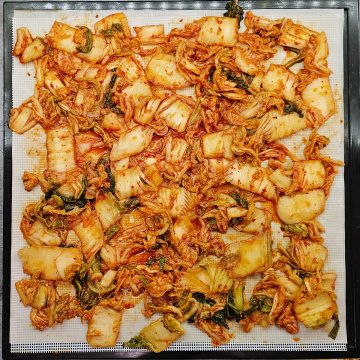
Step 1: Spread kimchi onto parchment paper or fruit leather sheets.
While kimchi will shrink when drying, because of the extra liquid, you don’t want to pile on the food as you might raw cabbage. Leaves do not have to be placed individually, but be mindful of density and spread things out a bit.
Step 2: Dry at lower than 115°F / 35°C
To preserve its nutrients, dry kimchi at a setting lower than 115°F / 35°C. If you use commercially jarred, shelf-stable kimchi before opening, you can dry at 140°F. Use my handy dehydrating magnet to keep track of what temperatures to use for all of your food!
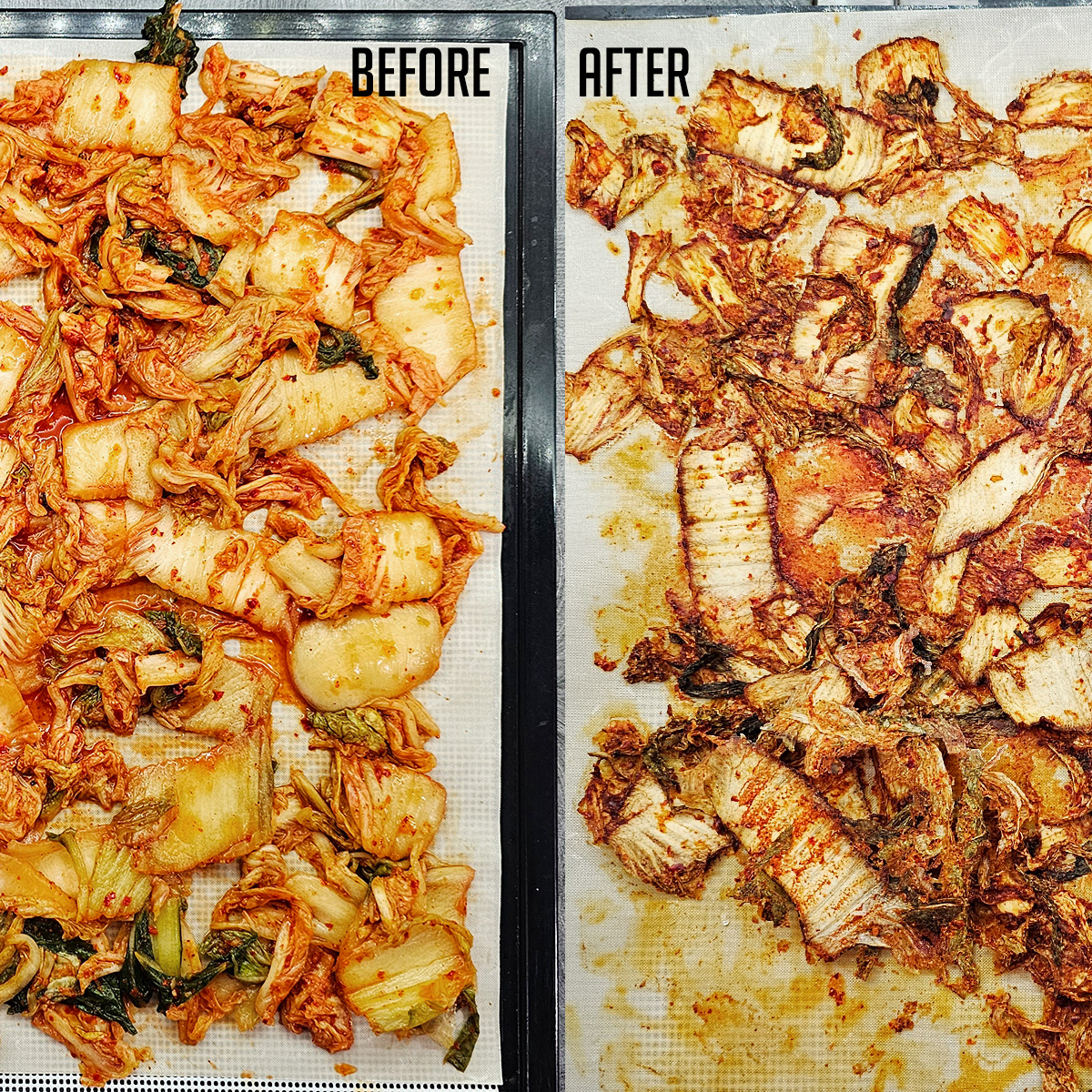
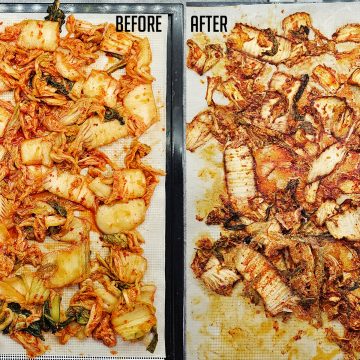
This can take anywhere from 12 to 24 hours, depending on how densely you spread the kimchi onto your dehydrator sheets and how thick the pieces are.
Step 3: Test for dryness
Kimchi pieces should be dry, may be pliable if large, and should break relatively easily when thoroughly dried.
Step 4: Condition
Place dried kimchi into canning jars with a lid and ring to seal (do not vacuum seal). Shake every day for up to five days, looking for any moisture or stickiness. If you find any during that time, put back into the dehydrator to finish the drying process, and condition again.
Read more information on how to condition dehydrated foods.
Step 5: Store
Store in an airtight container for up to two years. You may use a glass jar with a tight-fitting, airtight lid (like a canning jar) or mylar bags.
Rehydrating Dried Kimchi
- To rehydrate kimchi that was fresh when you dehydrated it, soak it in cold water for a few hours or overnight or in lukewarm water not above 115°F/43°C. Of course, you can also throw it into a soup or ramen to rehydrate, but know that prolonged exposure to higher temperatures reduces the probiotics.
- To rehydrate canned kimchi, a hot water soak or simmer works, as well as the cool water soak from the first option.
To Use
- Eat dried as a snack or rehydrate as a snack, too!
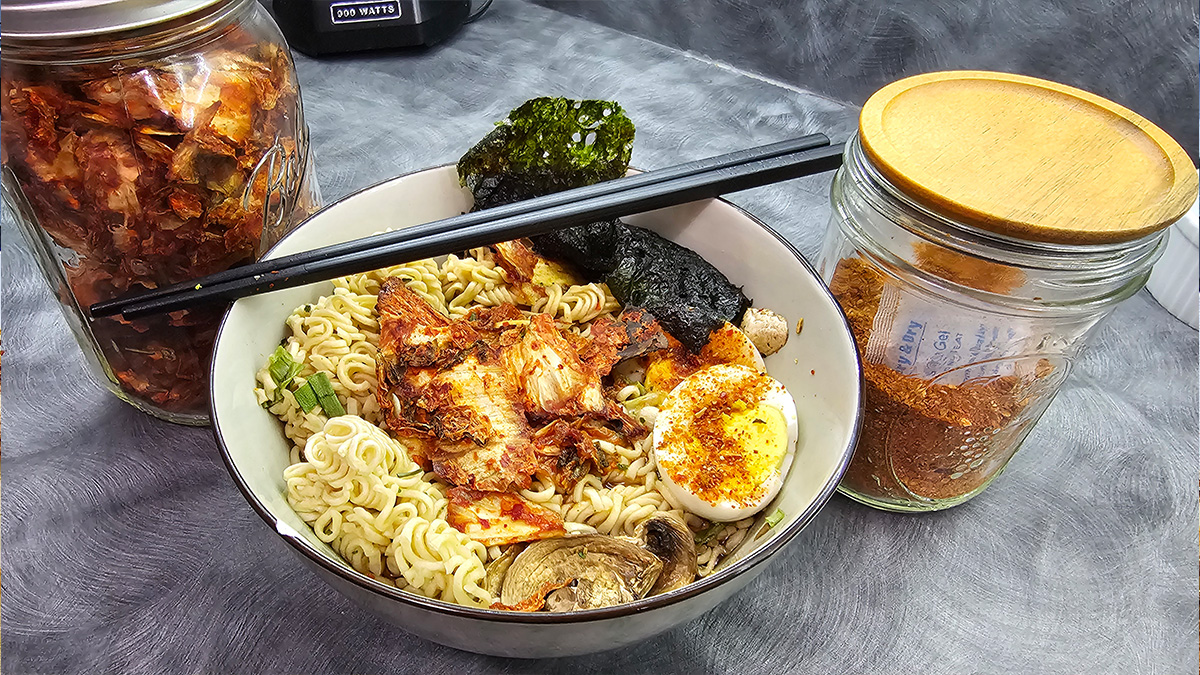
- Place dried kimchi in a ramen bowl for a crunchy component
- Place dried kimchi in a ramen bowl to soak in broth and use as it was originally made for
- Rehydrate and place on eggs for a very different kind of breakfast!
- How about some kimchi pancakes? (rehydrate first)
- Add to a stew for an increased flavor profile that will be awesome!
- Add to rice or noodles.
How to Create Kimchi Powder
Kimchi powder is a wonderful flavor enhancer to many meals. It adds a spicy and biting (from the vinegar) to dehydrated vegetable chips, ramen, seasoning rubs and more!
Simply dry as per the instructions above, and once fully conditioned, pop into your blender or bullet blender and pulse until it is a powder. Store in an airtight container as you would any vegetable powder (use a moisture absorber if you wish), and enjoy dusting it on everything!
- Eggs
- Veggie chips
- Popcorn
- Meat rubs
- Ramen dishes
- Asian dishes
- and more!
If you want to learn to make your own kimchi, Seasonal Homestead has a great recipe you can try!
Dehydrate Kimchi
Equipment
Ingredients
- Kimchi Home fermented or store bought
Instructions
- Spread kimchi onto parchment paper or fruit leather sheets.
- Dry at lower than 115°F / 35°C
- Test for dryness – dry, breakable,

- Condition for five days
- Store in airtight container
Darcy’s Tips
Rehydrating Dried Kimchi
- To rehydrate kimchi that was fresh when you dehydrated it, soak it in cold water for a few hours or overnight or in lukewarm water not above 115°F/43°C. Of course, you can also throw it into a soup or ramen to rehydrate, but know that prolonged exposure to higher temperatures reduces the probiotics.
- To rehydrate canned kimchi, a hot water soak or simmer works, as well as the cool water soak from the first option.
To Use
- Eat dried as a snack or rehydrate as a snack, too!
- Place dried kimchi in a ramen bowl for a crunchy component
- Place dried kimchi in a ramen bowl to soak in broth and use as it was originally made for
- Rehydrate and place on eggs for a very different kind of breakfast!
- How about some kimchi pancakes? (rehydrate first)
- Add to a stew for an increased flavor profile that will be awesome!
- Add to rice or noodles.
How to Create Kimchi Powder
Kimchi powder is a wonderful flavor enhancer to many meals. It adds a spicy and biting (from the vinegar) to dehydrated vegetable chips, ramen, seasoning rubs and more! Simply dry as per the instructions above, and once fully conditioned, pop into your blender or bullet blender and pulse until it is a powder. Store in an airtight container as you would any vegetable powder (use a moisture absorber if you wish), and enjoy dusting it on everything!- Eggs
- Veggie chips
- Popcorn
- Meat rubs
- Ramen dishes
- Asian dishes
- and more!
Nutrition
Nutritional information is an estimation only. Nutrient information for dehydrated foods is based on fresh. Use 1/4 of the servicing size for the same nutrient information. Thus 1 Cup of fresh fruit has the same sugars as 1/4 dried.
©ThePurposefulPantry. Photographs and content are copyright protected. Sharing of this recipe’s link is both encouraged and appreciated. Copying and/or pasting full recipes to any social media is strictly prohibited.